💫 Experience the Geminids Meteor Shower, 13 December | 100+ Shooting Stars Under One Sky 💫

MESSIER MARATHON 2026: One Night, 110 Objects, An Entire Universe

An extraordinary celebration of the night sky is arriving this spring. The Messier Marathon 2026, scheduled from  14 March to 22 March 2026, invites astronomy enthusiasts — from curious beginners to seasoned observers — to an immersive, multi-night event that combines competition, learning, camaraderie, and the sheer wonder of the universe overhead. 

Held across premier dark-sky astronomy sites, this year’s event spans nine consecutive days and nights, offering participants a structured yet adventurous itinerary: from orientation sessions and telescope calibration workshops in the evenings, to deep-sky hunting competitions through the night, ending with celebrations and award ceremonies at dawn. This is not merely an event — it is a pilgrimage under the stars.

The Messier Marathon is one of amateur astronomy’s most beloved annual traditions. Each March, around the new moon, the geometry of the Earth’s orbit creates a rare window during which all 110 objects in Charles Messier’s historic catalogue, galaxies, nebulae, star clusters, and more can theoretically be observed in a single night. The marathon window typically spans late March through early April near the spring equinox, when the entire catalogue sweeps across the sky from dusk to dawn.

The Messier Marathon is the closest thing astronomy has to a sporting event. You are racing the rotation of the Earth itself, every object sets in the west while new ones rise in the east, and you have only one night to catch them all.

The 2026 edition promises unprecedented programming: structured legs of observation (First Leg, Second Leg, Third Leg, Fourth Leg), thematic night-sky hunts including the Sky Hunter and Messier Hunter competitions, the Astro-Connect treasure hunt using clues hidden in the constellations, and dedicated astrophotography sessions under pristine dark skies. By day, or rather at sunrise, participants receive awards, participate in feedback sessions, and rest before the next night’s adventure.

This event is open to individuals, families, astronomy clubs, and institutions. Participants will be provided with full orientation, equipment access, site guides, and sky charts. Whether you observe with a naked eye, binoculars, or a computerised telescope, there is a place for you at the Messier Marathon 2026.

Registration and further details will be announced through official astronomy club channels and partner institutions. Dark skies, clear eyes, and an open heart are all you need to begin.

 WHAT EXACTLY IS THE MESSIER MARATHON?

The Messier Marathon traces its roots to an extraordinary coincidence of astronomy and geometry. In the 18th century, French astronomer Charles Messier (1730–1817) was on a mission to find comets. Frustrated by fuzzy, comet-like smudges in the sky that turned out to be distant galaxies, nebulae, and star clusters, he compiled a list of these nuisance objects that were definitely NOT comets — so he and other comet hunters wouldn’t waste time on them.

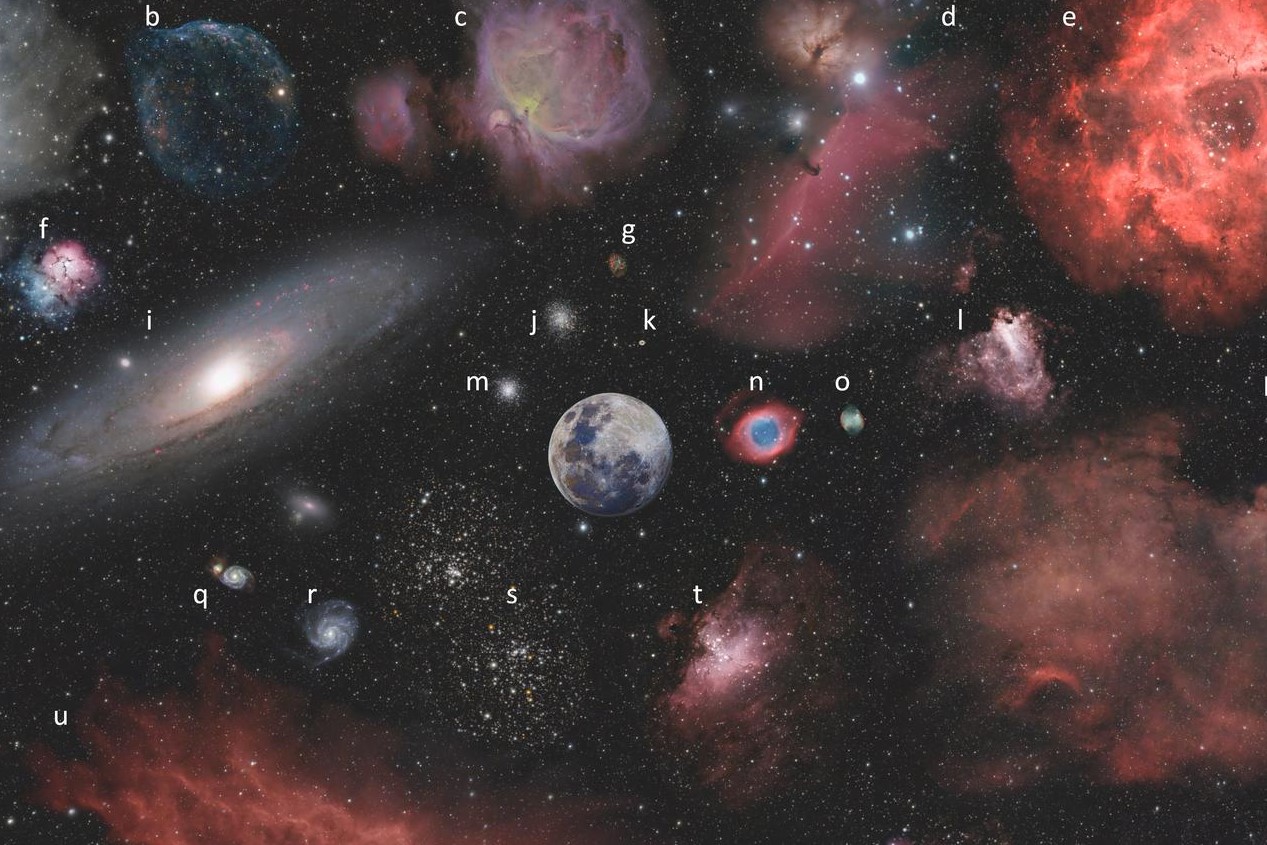
The result was the Messier Catalogue, published in stages between 1771 and 1781, listing 103 objects. His colleague Pierre Méchain later added objects, eventually bringing the total to 110 recognised Messier objects (M1 through M110). Ironically, what Messier compiled as a list of distractions became one of the most celebrated catalogues in all of astronomy. Today, Messier objects represent the finest deep-sky showpieces visible from the Northern Hemisphere: the Orion Nebula, the Andromeda Galaxy, the Pleiades, the Crab Nebula, and 106 more.

 Why March? The Geometry of the Marathon

During a narrow window each year, roughly mid-March to early April, centered on the new moon nearest the vernal equinox, the entire Messier catalogue is positioned such that it can be observed in a single night. As the Earth rotates, Messier objects rise in the east and set in the west just like the Sun. In March, the geometry aligns perfectly: all 110 objects are above the horizon at some point between astronomical dusk and astronomical dawn.

The trickiest objects are those near the Sun — M74, M77, M33, M31, M32, M110 in the west at dusk, and M72, M73, M2, M75 in the east just before dawn. These are the “sprint” objects that must be caught in narrow windows. The bulk of the catalogue — Perseus clusters, Virgo Galaxy Cluster, Leo galaxies — fills the middle of the night. An experienced observer with a clear dark sky and a quality telescope can realistically observe 100–109 objects in one marathon night.

The Challenge —

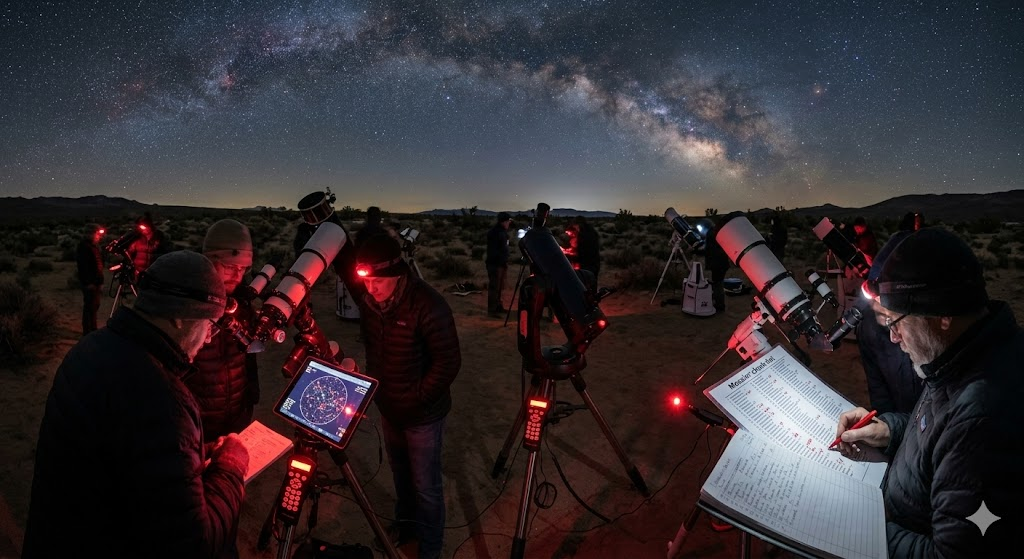
To “complete” a Messier Marathon means to observe all 110 objects in a single night — from the first Messier object visible in the western sky after sunset to the last one rising in the east before sunrise. The entire sequence takes approximately 8–10 hours of continuous observation. Participants must move rapidly between objects, know their sky charts intimately, and battle dew, fatigue, cold temperatures, and the relentless rotation of the Earth.

At the Messier Marathon 2026, the marathon is divided into four competitive legs, with winners declared at the end of each leg. This makes the competition accessible, exciting, and rewarding even for those who don’t complete all 110 objects.
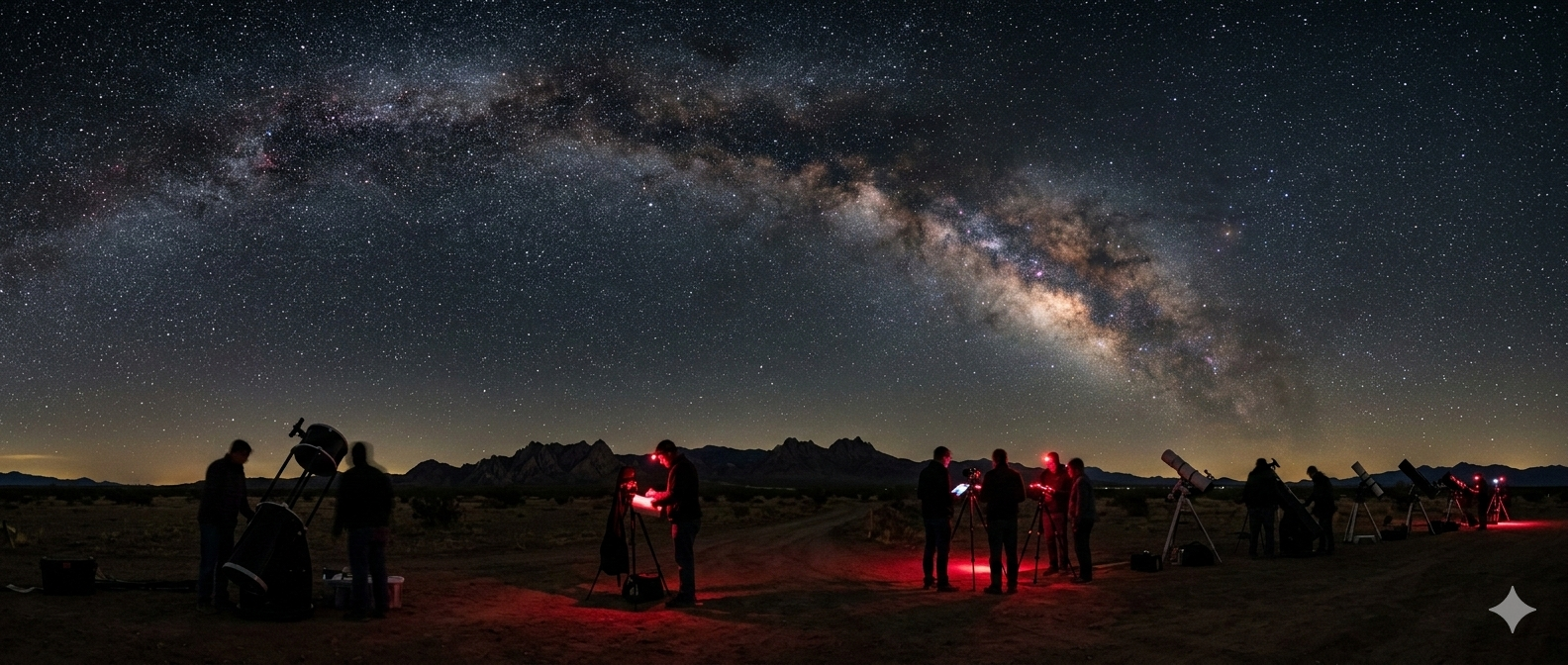
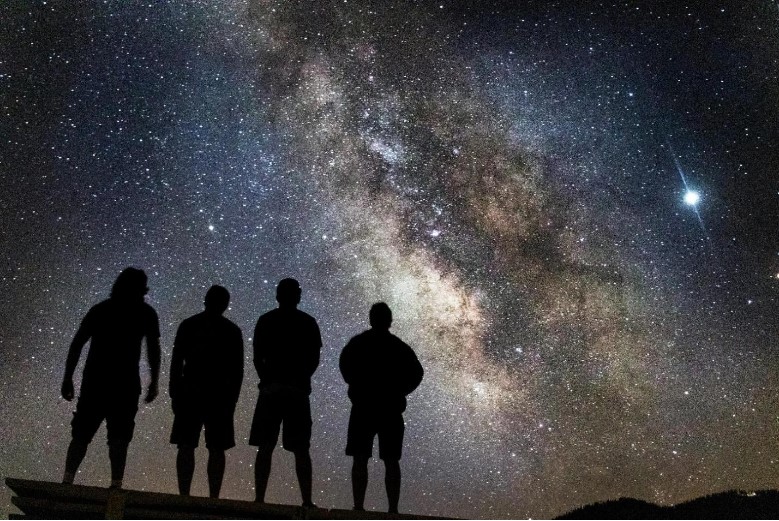
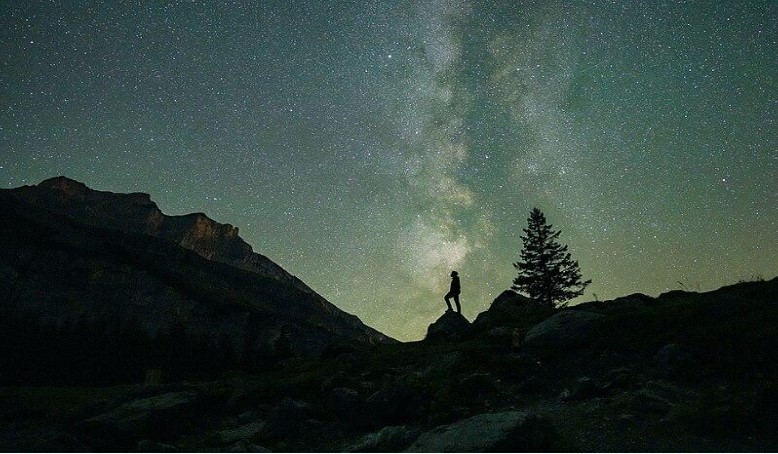
Observation at Night Starry Sky

WHAT MAKES THIS EVENT UNFORGETTABLE?

The Four Legs of Hunting-

The heart of the Messier Marathon 2026 is structured into four competitive observation legs each night.

The First Leg, beginning just after dusk, targets the most challenging western Messier objects that quickly set after sunset — objects like M74 (the Phantom Galaxy), M77, the Triangulum Galaxy (M33), and the Andromeda Galaxy trio (M31, M32, M110). These require speed and precision as the sky darkens.

The Second Leg covers the rich northern and southern sky objects as the night deepens — Perseus double cluster (NGC 869 & 884), Auriga’s trio of open clusters (M36, M37, M38), Orion Nebula (M42), and the sprawling Virgo Galaxy Cluster with its 15+ Messier galaxies. This is the “endurance” leg that separates casual observers from dedicated marathon runners.

The Third Leg (on Day 2 and beyond) incorporates *astrophotography*wide-field and mobile photography using smartphones and DSLR cameras. Participants photograph iconic objects and submit their best shots for judging. There is something magical about capturing a nebula with your phone from a dark sky site.

The Fourth Leg runs in the pre-dawn hours, targeting eastern objects rising just before sunrise — the Sagittarius and Scorpius star-cloud objects: M8 (Lagoon Nebula), M20 (Trifid Nebula), M22, M24, and the globular clusters of the galactic centre. These are among the most spectacular objects in the entire catalogue.

 Astro-Connect: The Constellation Treasure Hunt

One of the event’s most unique features is Astro-Connect, a guided treasure hunt played out under the real night sky. Teams receive clues hidden in the names, positions, or lore of celestial objects. Following clues leads to physical locations at the observation site, where new challenges await. Solving each clue requires astronomical knowledge, teamwork, and creative thinking. The final treasure can only be claimed by the team that masters all the clues and challenges. It transforms the observatory into an adventure playground lit by starlight.

The Golden Hours: Dawn Observations

Some of the most emotionally powerful moments of the Messier Marathon 2026 happen in the final hour before sunrise. Participants are sleep-deprived, chilled by the night air, and running on tea and starlight and then the Sagittarius star clouds begin to rise in the southeast, bringing with them the brilliant globular clusters and emission nebulae of our galaxy’s core. Watching M8, the Lagoon Nebula, emerge from the horizon’s glow while the sky slowly brightens is a transcendent experience. Breakfast served at sunrise feels like a reward from the cosmos itself.

Awards, Titles & Badges

Every observation leg has its own champion.

Sky Hunter — awarded to the winner of the First Leg (the dusk sprint for western objects)

Messier Hunter — goes to the fastest and most accurate hunter of the Second Leg

Legend of the Night — crowns the second-leg leader on each marathon night

Genius of Heaven — bestowed upon the Third Leg winner

Fourth Leg Winner — receives their declaration at the closing breakfast ceremony

All participants receive certificates of participation, and top performers receive medals, badges, and the permanent distinction of having completed a Messier Marathon.
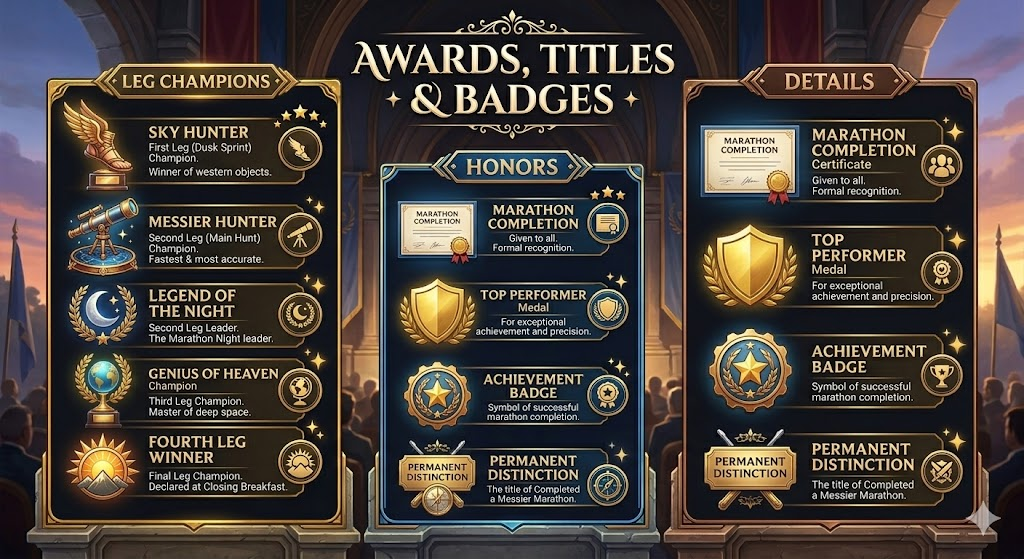
Awards, Titles & Badges

Pro Tips for Your First Messier Marathon

Adapt your eyes Allow 30–45 minutes for your eyes to fully dark-adapt after leaving any lit area. Never look at a white light source. Use only dim red flashlights for reading charts.

Know your priority objects. The western sprint objects (M74, M77, M33) must be caught in the first 30 minutes after dusk. Have your telescope pre-pointed. Similarly, the eastern dawn objects (M72, M73) must be caught in the 30 minutes before sunrise. These are make-or-break targets.

Dress for cold Even in March, observatory sites are often at elevation, and temperatures drop significantly after midnight. Layers, warm gloves, and a sleeping bag to wrap around your legs while observing are essential. Cold feet are the enemy of the marathon observer.

Stay hydrated and caffeinated wisely.  Provided tea and coffee breaks are strategically timed. Avoid over-caffeinating early — you need to last until 5 AM.

DARK SKIES, LIGHT POLLUTION & WHY OBSERVATION SITES MATTER

The Bortle Dark-Sky Scale (1–9) measures sky darkness:

Class 1 (Exceptional): Inner Zodiacal Light and full airglow visible. M33 direct vision. No light domes anywhere. The Milky Way casts visible shadows on the ground. Limiting magnitude~7.6–8.0.

Class 2 (Truly Dark): Zodiacal light striking in spring/autumn. M33 is easy in averted vision. Some light dome on one horizon only. Magnitude 7.1–7.5.

Class 3 (Rural): Some light pollution is evident on 1–2 horizons, but the Milky Way is still complex and detailed. Magnitude 6.6–7.0.

Class 4 (Rural/Suburban Transition): Light pollution is evident on several horizons. The Milky Way is still impressive overhead. Magnitude 6.1–6.5.

Class 5–6 (Suburban): Milky Way washed out or invisible. Many nebulae invisible. Limiting magnitude 5.1–6.0.

Class 7–9 (Urban): Only bright stars visible. The Milky Way is completely invisible. Limiting magnitude <5.0.

For a successful Messier Marathon, you need at minimum a Class 4 site, though Class 2–3 is ideal. The Messier Marathon 2026 observation sites are specifically selected in the Class 3–4 range.
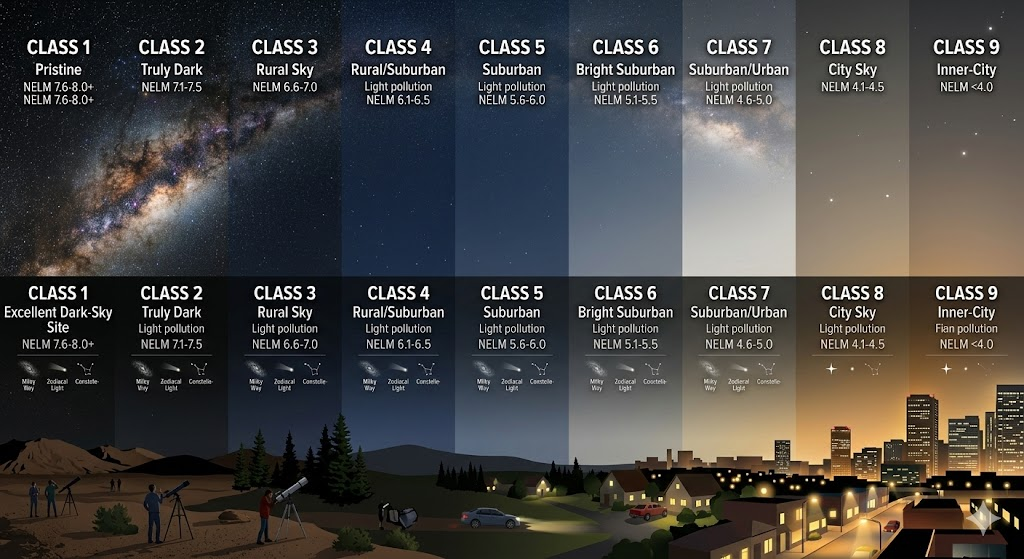
Bortle Dark-Sky Scale

ASTRONOMY AS COMMUNITY: THE HUMAN SIDE OF THE MARATHON

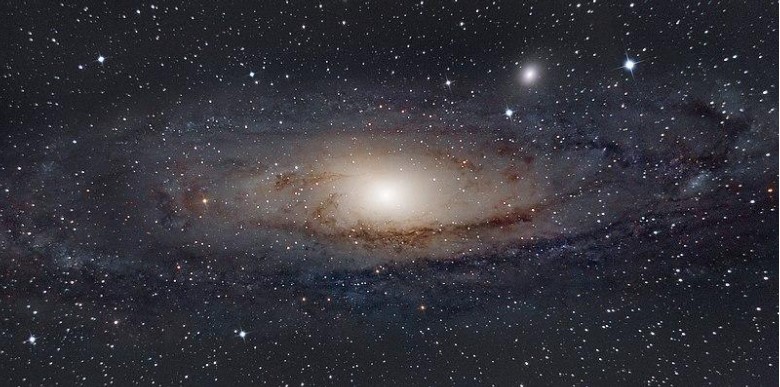
The Messier Marathon is, at its heart, a communal experience. There is something profoundly connecting about spending a night under the stars with a group of fellow humans, all pointing their instruments at the same ancient light. You overhear someone exclaim as they find M51’s spiral arms for the first time. You help a beginner find the Andromeda Galaxy and watch the wonder cross their face when they realise they are looking at two trillion stars 2.5 million light-years away. You share tea at 3 AM and talk about your favourite objects. You fall asleep at dawn to the sound of birdsong, having spent an entire night exploring the universe.

The Messier Marathon 2026 is designed to foster exactly this spirit. The mix of competitive legs, treasure hunts, educational sessions, and shared meals creates a community of observers that often continues long after the event ends — in WhatsApp groups, at star parties, in friendships forged under the Milky Way.

 “In the southern Indian Ocean, in the high deserts of Arizona, on the plains of Rajasthan, and in backyard gardens across the world — every March, thousands of amateur astronomers turn their telescopes skyward and race the night. They carry on a tradition begun by Messier himself: the stubborn human insistence on knowing what is out there.”

Who Should Attend the Messier Marathon 2026?

Beginners – who have never looked through a telescope — you will receive complete orientation, telescope guidance, and sky charts. You don’t need to know a single star to participate; you just need curiosity.

Intermediate amateur astronomers- who know their Messier objects and want to challenge themselves with the full marathon format and competitive legs.

Experienced observers and astrophotographers – who want dark skies, camaraderie, and the structured challenge of the marathon alongside astrophotography sessions.

Students, teachers, and families – for whom this event offers one of the finest science education experiences available, learning astronomy not from a textbook but from the universe itself, in real time, with your own eyes.


Messier Marathon 2026

14 March – 22 March 2026

Registration is open through the official site, Astroport Global India
Clear skies,
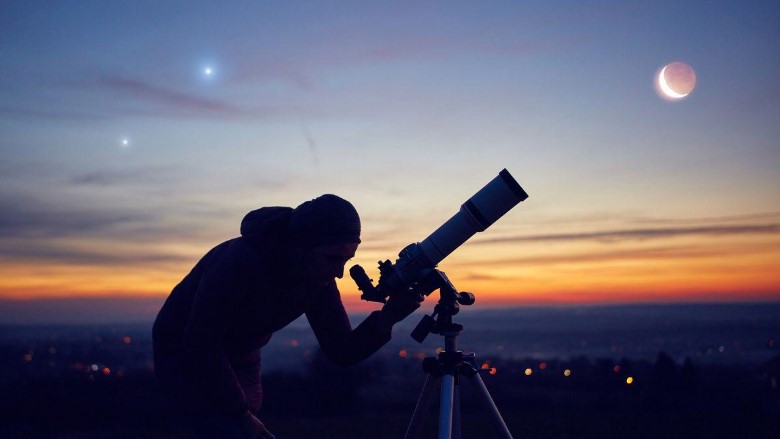
Unforgettable Stargazing and Space Experience Activities with Astroport

How Stargazing experience becomes unforgettable?

Several factors contribute to making an experience unforgettable. Emotional impact plays a significant role, as strong feelings, whether awe from witnessing the cosmos or the sense of wonder during stargazing, tend to embed memories deeply. Observing rare celestial events captivate attention and enhance memory formation. Personal relevance is another key factor; when an experience aligns with one’s interests or identity, whether it’s exploring the vastness of space or marvelling at the beauty of the night sky, the combination of these elements ensures that certain experiences remain etched in memory forever.

Sense of Wonder and Awe: Unlike many entertainment activities that focus on human-made experiences, stargazing directs attention to the natural world and the cosmos. It fosters a sense of connection with something larger than oneself—the vastness of space and the billions of stars and galaxies that populate it.  Observing the vastness of the night sky, with its countless stars, planets, and celestial phenomena, can evoke a profound sense of wonder and awe. This emotional response is powerful and tends to create lasting memories.

Escape from Urban Life to the Beauty: Stargazing typically takes place away from city lights and noise pollution, offering a retreat into nature. This escape into a darker, quieter environment enhances the clarity of celestial observations and provides a refreshing break from urban hustle. Being surrounded by natural beauty and tranquillity makes the experience more memorable.

Sense of Discovery: Stargazing sessions, especially those led by experts, often include insights into the cosmos, such as identifying constellations, learning about star formation, or observing planets. This exposure to new knowledge can spark a sense of discovery and curiosity, providing participants with a deeper understanding of celestial phenomena and scientific concepts.

Long-term Impact: Attending a stargazing session with experts can alter one’s perception by expanding their worldview. It can inspire a greater appreciation for science, nature, and the interconnectedness of the universe, influencing how we perceive our place in the cosmos. 

Community and Social Interaction: Stargazing can be a social activity, bringing together people with a shared interest in astronomy and the night sky. This sense of community fosters connections and conversations, creating memorable experiences shared among like-minded individuals.

Unexpected Events: Witnessing rare celestial events such as meteor showers, eclipses, or even seeing satellites or the International Space Station passing overhead can make a stargazing session exceptionally memorable.

Inspiration and Creativity: The inspiration derived from stargazing—whether through the beauty of the night sky, the stories behind constellations, or the achievements of space exploration—can fuel creativity and innovation in various aspects of life.

Environmental Awareness: Stargazing often takes place in locations away from urban light pollution, highlighting the importance of preserving dark skies and protecting natural habitats. It can inspire individuals to advocate for environmental conservation and responsible use of natural resources.

Educational Opportunities: Stargazing introduces young people to astronomy, space science, and Astrophysics in a practical and engaging manner. It stimulates curiosity about the natural world and encourages a deeper understanding of scientific principles.

Cultural and Historical Context: Learning about constellations, myths, and cultural stories associated with stars and planets introduces young people to diverse cultural perspectives and historical narratives, enriching their understanding of human civilization.

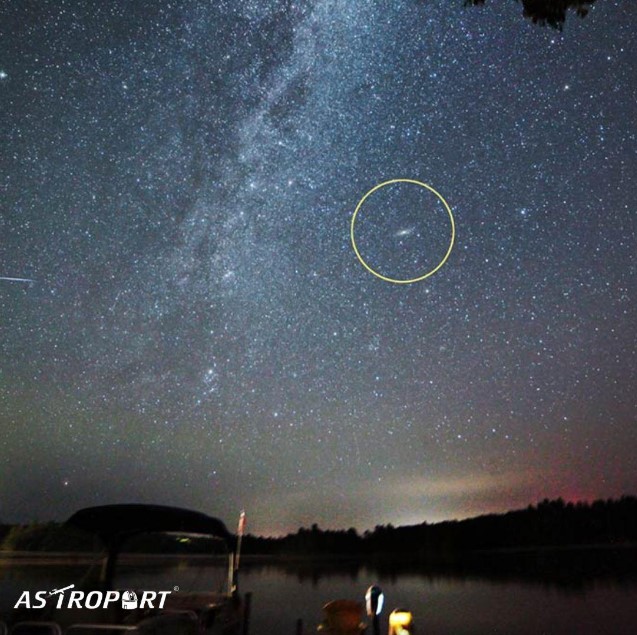
Andromeda Galax
Andromeda Galax

The Enchantment of Stargazing

Imagine standing under the clear, dark skies of Ladakh, Rajasthan, or Uttarakhand, surrounded by the majestic beauty of the Himalayas or the serene desert landscape. These are the places where our Astroport Sites are located. And our stargazing sessions are meticulously organized to ensure that all participants are awestruck and carry memories to last a lifetime.

Stargazing can be exceptionally beneficial for the younger generation in several ways:

  1. Technological Literacy: Engaging in stargazing with telescopes or digital apps enhances technological literacy. It familiarizes youngsters with observational tools, digital imaging techniques, and software used in astronomy.
  2. Personal Development: Stargazing encourages patience, focus, and attention to detail. It promotes mindfulness and the ability to appreciate the beauty of natural phenomena, contributing to emotional and mental well-being.
  3. Inspiration for Creativity: The beauty and mysteries of the cosmos often inspire artistic expression, from astrophotography and visual arts to storytelling and music. It encourages creativity and imagination in young minds.

Emotional Impact and Personal Reflection from our Team

As a stargazing expert at Astroport Sariska, Tiger Reserve Resort, and after having spent six months at Sariska, I encountered countless memorable moments under the starry sky.  I can attest to the transformative power of these experiences. The first night sky at Sariska was a revelation. We’ve all seen stars since childhood, but beholding over 4000 stars spread across the open sky was awe-inspiring. The mental image of the dark sky adorned with countless stars still resonates deep within me. 

One particularly vivid memory involved witnessing Jupiter through our 16-inch reflector telescope. Jupiter’s massive size and distinct bands of clouds left everyone in awe. I had the privilege of capturing magnified images of Jupiter and its four moons, each one a world of its own orbiting the gas giant.

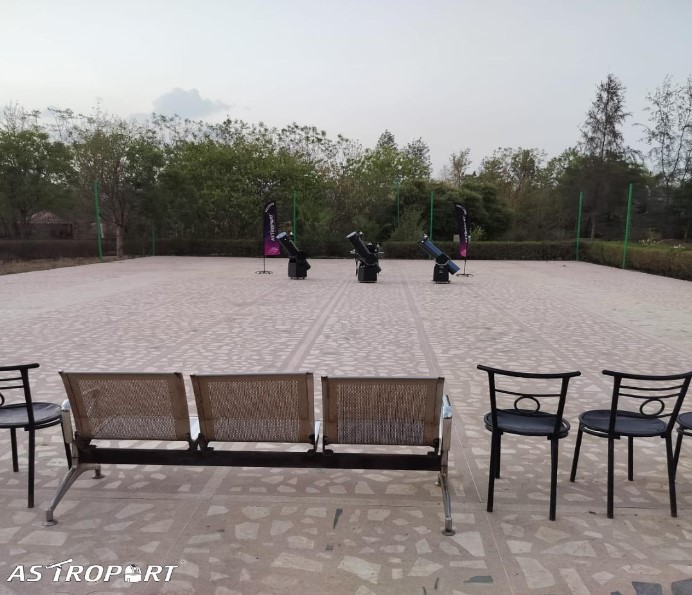
Astroport Sariska
Astroport Sariska

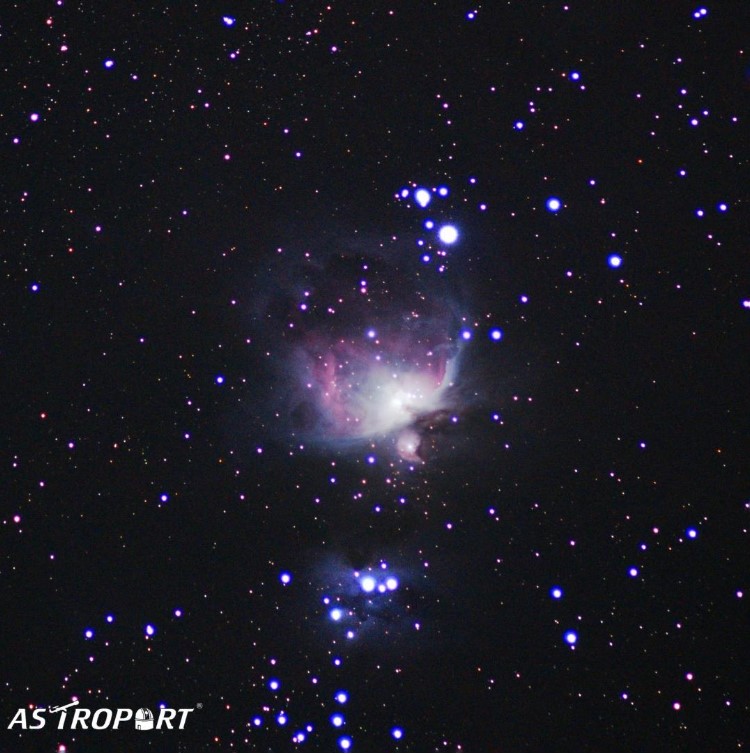
Then witnessing the ethereal beauty of nebulae, such as the Orion Nebula, adorned with vibrant hues, is a privilege that constantly reminds me of how fortunate I am to share these moments with others. These experiences not only highlighted the marvels of our solar system but also sparked conversations about the wonders of space exploration.

Our stargazing sessions are designed in a way that offers more than just observation. 

Orion Nebula
Orion Nebula

Beyond Earth: Space Experience Activities

In addition to stargazing, Astroport offers unique space experience activities, including hands-on rocketry sessions. 

Our rocketry sessions showcase the marvels of space technology and innovation. Participants learn about the engineering behind rockets and the transformative impact of space exploration on everyday technologies. This interactive experience sparks curiosity and inspires future engineers, scientists, and space enthusiasts to pursue careers in STEM fields. These sessions provide practical insights into aerospace engineering and ignite a passion for exploration among participants.

Beyond Earth: Space Experience Activities

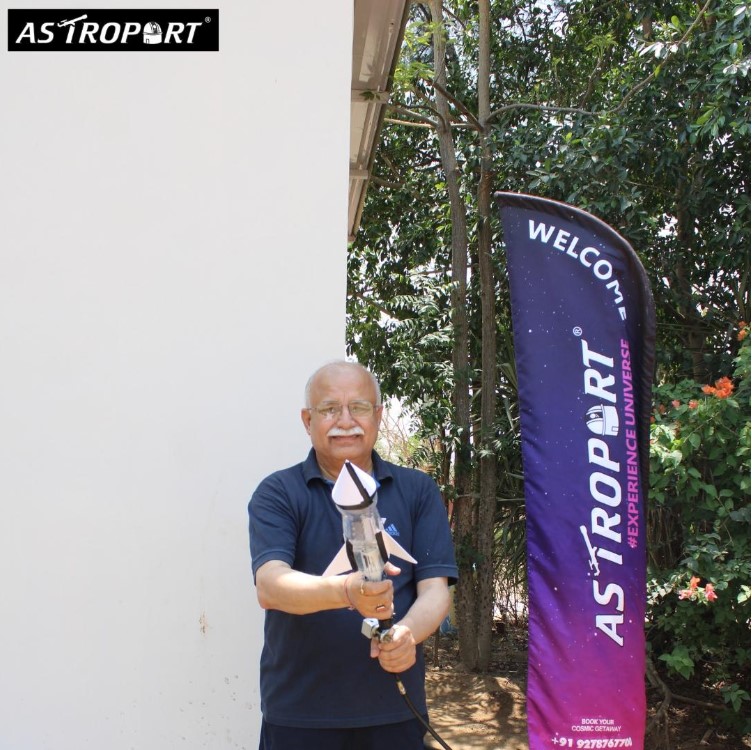
Once a 65 years old enthusiast joined us for the Rocketry session, initially he was a bit hesitant but then he joined. Crafted the Rocket with fins and cones by his hands, Surrounded by young team, he learned and bonded. At the launching moments the thrill and camaraderie rekindled his passion, proving age couldn’t limit anyone’s dreams of exploring the skies once more.

Cultural and Historical Significance

At Astroport Ajmer, one of the finest hotels to stay in Ajmer, we celebrate the cultural and historical significance of stargazing and space exploration. Our programs highlight how different cultures have interpreted the night sky throughout history, enriching participants’ understanding of global perspectives on astronomy.

Environmental Conservation and Dark Sky Preservation

We are committed to environmental conservation and dark sky preservation. By choosing remote and carefully selected locations for our stargazing activities, we minimize light pollution and preserve natural habitats. We advocate for sustainable practices to protect our planet’s natural beauty and ensure future generations can continue to enjoy the wonders of the night sky.

The Lifelong Impact of Stargazing and Space Exploration

The memories created during stargazing and space experience activities endure long after the moment has passed. They shape our worldview, influence our career paths, and inspire future generations to reach for the stars. These experiences foster a deep appreciation for science, nature, and the interconnectedness of all life on Earth and beyond.

Environmental Awareness and Dark Sky Preservation

Stargazing also highlights the importance of preserving natural environments, particularly dark skies. Light pollution poses a significant threat to our ability to observe and study the night sky. By advocating for dark sky conservation and sustainable lighting practices, enthusiasts ensure that future generations can continue to enjoy and learn from the wonders of the universe.

Inspiring Creativity and Cultural Exchange

The beauty of stargazing and space exploration transcends scientific inquiry; it inspires creativity and cultural exchange. Artists, writers, musicians, and filmmakers draw inspiration from the cosmic ballet of stars and planets, creating works that celebrate our place in the cosmos and reflect the universal human experience.

Join us as we explore the most breathtaking stargazing and space experience activities around the world. 

At Astroport, we believe in offering more than just a glimpse of the night sky. Our mission is to provide unforgettable stargazing and space experience activities that inspire wonder, curiosity, and a deeper connection with the universe. With prime locations in India like Ladakh, Rajasthan, and Uttarakhand, as well as Karnataka and Kerala, we invite you to embark on a journey that goes beyond observation. 

Cheers to clear-skies for stargazing. 

A Guide to Stargazing and Space Experience Activities

The word ‘stargazing’ whenever we hear it we think about something observing like stars and planets, but the stargazing is something far different from that. It is the activity in which we got lost in exploring the vastness of the universe. You start to feel that our place is very tiny and unnoticeable in this vast and ever-expanding universe. You will come to know the various amazing facts about the celestial bodies and how they connect to our daily life, but we never paid attention to it.  

Stargazing and Space Experience Activities
Credits: Pexels.com

Today, we will be providing a comprehensive guide for both beginners and enthusiasts. The best locations for stargazing, tips for capturing stunning astrophotography, and some of our best recommendations for immersive space experiences, are part of today’s guide to stargazing and space experience activities. 

You will also feel the peace in the lap of nature which you will never experience in the cities because of some reasons listed below-

Light Pollution: 

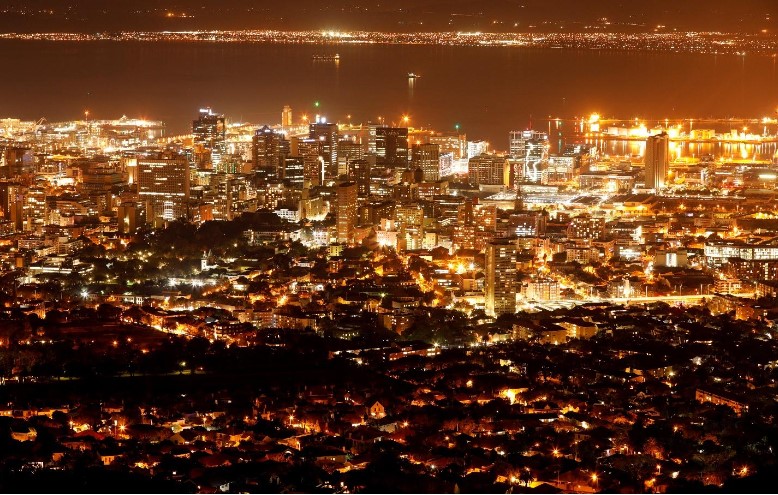
The first and the major reason is light pollution. You will think how light pollution effects the stargazing. Light pollution refers to the excessive, misdirected, or artificial light that brightens the night sky and disrupts natural lights of the celestial objects coming from the distance.

Light Pollution
Light Pollution: Credits: Pexels.com

Therefore, you must travel out of the cities and find a dark place where sky should be clear and dark it results in better sky with full of stars like if you visit near Sariska Tiger Reserve, Rajasthan you will get minimum light pollution. After reaching such a place, lie down on the ground and close your eyes for few minutes which improve your dark adaptation, a must phenomenon for good stargazing experience. After that do not use any smartphones and avoid seeing light emitting objects because whenever you go to a dark place it takes about 20 – 30 minutes for our eyes to adapt to the dark environment. 

Talking about the human eye, Rods and cones are two types of photoreceptor cells found in the retina, which are crucial for vision. Rods are highly sensitive to light and are primarily responsible for vision in low-light conditions (scotopic vision) and Cones are responsible for color vision and detail in bright light conditions (photopic vision).

Different types of space experience activities:

There are many different types of space experience activities like identifying the constellation, astrophotography, observation through telescope, safe solar observation, Binocular observation and much more.

Constellation Hunting: 

What is a constellation? It is a group of stars that form an imaginary shape and has been given a name. Ancient humans did it to break the night sky into smaller parts so that we could understand it better. 

For identifying the constellations, you can use a tool called Planisphere. It is a star map, a part of the celestial sphere. It is in the form of two adjustable disks which rotate on a common pivot. Planispheres are designed for a particular geographic latitude. They can be adjusted to display the visible stars for specific time and date for that particular location. You can also use smartphone application to track the stars, constellations and planets by pointing your phone to the object. The app that is used for this is called Stellarium, it can be accessed with a smartphone and on internet browser also. It is very simple to use. 

With the help of these two methods, you can plan your observation by checking out the rise time and set time of any constellations and planets.

Telescope pointing:

Telescope pointing refers to the process of accurately aiming a telescope at a specific celestial object in the sky for observation. It involves aligning the telescope’s optical axis to precisely target and track objects such as stars, planets, nebulae, galaxies, and other astronomical phenomena.

Methods for Telescope Pointing:

Manual Pointing: Beginners and enthusiasts often manually point the telescope using the finder scope and aligning the telescope’s optics with the target object.

Star Hopping: A technique where observers use recognizable stars as reference points to navigate from one celestial object to another.

Go-To Telescopes: Advanced telescopes with computerized systems can use databases of celestial objects and precise motorized mounts to automatically point the telescope at selected targets.

Telescope pointing
Telescope pointing-Credits: Pexels.com

Binocular Observation:

Binoculars provide a wider field of view compared to telescopes, making it easier to locate and observe large celestial objects like star clusters and the Moon. Binocular observation is commonly used in various activities such as birdwatching, stargazing, hunting and military reconnaissance. The use of binoculars provides several advantages over monocular vision, including depth perception.

Astrophotography: 

While stargazing, astrophotography is the cherry on the cake. Astrophotography opens a window to the awe-inspiring beauty of the cosmos, allowing us to capture the celestial objects and phenomena that are millions of light-years away. Whether you’re a seasoned astrophotographer or just starting out, mastering this art requires both technical know-how and a passion for exploring the universe. You can also take the picture of yourself with sky full of stars. 

Astrophotography
Astrophotography – Credits: Pexels.com

Hydro Rocketry:

Hydro rocketry, also known as water rocketry, is a fun and educational activity that involves building and launching rockets powered by water and compressed air. It offers an exciting hands-on experience for learning and enjoyment, making it popular in schools, scouting programs, and science clubs. It combines science, engineering, and creativity into a thrilling activity where participants learn the basics of rocketry in a safe and controlled environment.

Where to experience it all?

If you want to enjoy all these activities in a safe and controlled environment, then Astroport is where you should be heading towards. Here, you will find the expert astronomers who will guide you, teach you and then let you explore on your own. Astroports are located across India, and it can a perfect destination for your next adventure tour

Hydro Rocketry
Credits: Pexels.com

Astroport is the pioneer that is very well known for the stargazing and dark sky experience with over 10,000+ reviews and you can plan your trip according to your convenience.

Engaging Stargazing and Space Activities for All Ages

Welcome fellow astronomers! 

Humans have always been fascinated by space, and today, that curiosity is stronger than ever. From ancient times to now, we have been trying to understand the universe better. Let me introduce you to Astroport, India’s first destination dedicated to astronomy and space experiences. 

Astroport’s sites are situated away in peaceful natural surroundings, far away from city lights, making it perfect for all kinds of travellers. Whether you’re young or just young at heart, Astroport promises an amazing journey into space for all ages. 

Astroport is more than just a place to visit — it’s a place to dive into exciting stargazing programs and activities led by experts. You can learn how to set up telescopes, read star maps, and discover so much more about the universe. It is also a place where students, communities, and anyone curious about the stars and space can learn and explore. Astroport blends education with adventure to help everyone understand the wonders above us. 

Whether you are seeking knowledge or just want to marvel at the stars, Astroport is here to share the beauty and mystery of space with you. 

Astroport is the leading brand in experiential tourism and Astrotourism which establishes stargazing and space experience sites at only selected hotels and resorts in India

Stargazing and Space Experience Activities for all Ages

Discover the wonders of the universe under the expert guidance of Astroport’s knowledgeable astronomers. Whether you’re unfamiliar with telescopes, constellation names, star mythology, or how to find celestial objects, there is no need to worry. At Astroport, skilled educators lead engaging sessions that cater to all levels of interest and experience. 

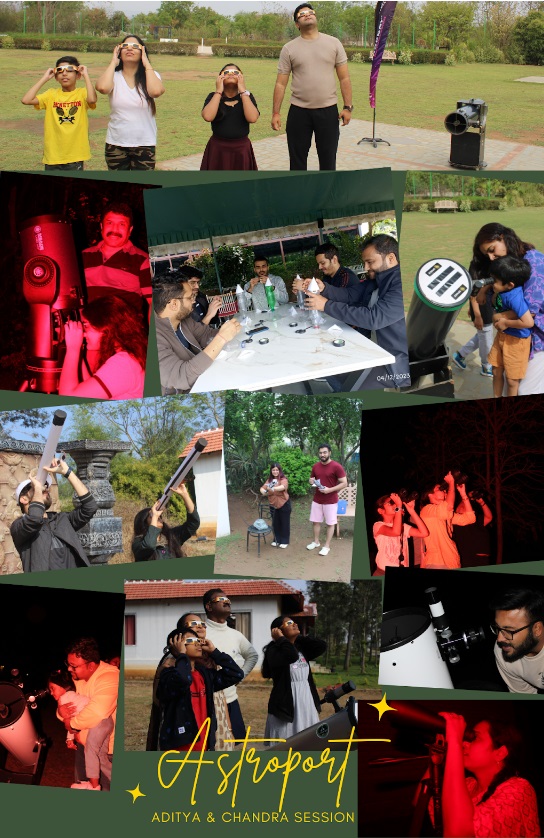
During the Aditya (morning) sessions and Chandra (night) sessions, participants are immersed in activities designed to expand their understanding of the cosmos. These workshops not only provide opportunities to observe celestial phenomena but also encourage curiosity and intellectual growth, making them perfect for both individuals and families. 

Aditya session 

Viewing the Sun Safely: In this session participants will learn about the reasons why scientists study Sun. This session informs about how to safely observe the Sun and realize the importance of using safe methods for solar observation. They will learn about different solar features. They will also use ball projector, pinhole projector and solar view goggles to have a safe look at the Sun. 

Fun with hydro rocketry: In this specific session participants launch their own bottle rockets using the hydro rocket launcher. They compete in teams to land the rockets in the target destination using their knowledge of launch angle, pressure, and range. 

Air rocketry challenge: Participants launch paper rockets using the launcher. They compete in teams to land the rockets in the target destination.

Strolling through the solar system: The solar system is unimaginably vast. This session provides an opportunity to visualize this vastness. In this session participants develop an understanding of the relative sizes (through the use of eatables) and distances (by measuring it in the number of steps) between planets of the solar system and by scaling down the distance & size of every object of the solar system. Learners are amazed by the experience of the vastness of the solar system as they actually walk through the solar system. 

DIY- Your own solar watch: have you ever thought about how people knew the time before watches were invented? In ancient times, they built observatories like Jantar Mantar to understand the sky and time. These places show us how smart people were back then. But have you ever wondered why it was so important for them to build these places accurately? It’s because they needed to know the time precisely without any clocks! This, session teaches about sundials and why they were crucial for keeping time. We’ll also learn how to make our own Sun Watches using horizontal sundials and see how they actually work.  

Colony on the Moon: People are curious about living in space, much like how explorers were once drawn to new lands and the open sea. The idea of living on the Moon has been in science fiction for a long time, but now it’s becoming more real with human efforts. A colony on the Moon could give us access to resources and energy that we can’t easily get on Earth. It could also be a starting point for exploring even more of our galaxy and beyond. In this session, participants will learn about the challenges of living on the Moon and how scientists are working to solve them. They’ll see an interesting presentation about these challenges and then they’ll have the chance to design and create a model of a lunar settlement. This settlement could be where people might live in the next fifty years. 

Stargazing and Space Experience Activities for all Ages

Chandra Session 

Deep Space Voyage: This program conducted daily in the evening at Astroports guests. The program serves as a useful introduction to the world of Astronomy for newcomers. ‘Deep Space Voyage’ will take the visitors that are led by an astronomy educator into the discovery of constellations, Planets, Deep Sky Objects as well as introduce them to telescope as one of the most important tools used by astronomers.  

Trip to Luna: ‘Trip to Luna’ will take the visitors that are led by an astronomy educator into the discovery of our nearest neighbour in space – Moon as well as planets. In ‘Trip to Luna’ Participants will marvel at the captivating sight of the Moon through a telescope and binoculars and engage in a variety of activities such as making craters, on an artificial lunar surface, and clicking pictures of the Moon to better understand our nearest celestial neighbour. 

Celestial Bonanza: ‘Celestial Bonanza’ is one of the astronomy evening observation sessions having the motto – Enrich, Engage, Educate. In this session Moon, Planets, Deep Sky Objects and Constellations. Observe all of the above this evening. 

Sky and Maps: Maps in a sense symbolize exploration. In this session participants explore the night sky with one of the most versatile maps of the sky – a Planisphere while finding the pole star with the help of Ursa Major or Cassiopeia Constellation Watch (Using Planisphere) 

Cosmic Tools: The program serves as a useful introduction to the world of Astronomy for newcomers. ‘Cosmic Tools’ will take the visitors that are led by an astronomy educator into the discovery of constellations, Planets and Deep Sky Objects. You will Explore the night sky with one of the best night sky simulation tool available “Stellarium” – A planetarium software.  

Constellation Hunt: “Constellation Hunt” will focus on the learning about many constellations in the sky; learn about their origins, their stories. Our educator will show and challenge you to hunt not just the most prominent constellations but even the faint ones because sometimes, it is hunting the faint constellation where the most fun lies. 

Moon Madness: “Moon Madness” will focus on the learning about the brightest stars in the sky, learn about their origins, their stories. This session also explores about moon and its features. We will learn about the telescopes as well as conduct a challenge to explore the features on the moon. 

Whether you’re a seasoned stargazer or just starting your astronomical adventures, Astroport offers an array of activities that is for all ages and levels of curiosity. From safe solar observations to launching rockets, from walking through the solar system to imagining life on the Moon, each session promises to spark wonder and deepen your understanding of our celestial surroundings. 

Imagine marvelling at the Moon through a telescope, or learning about constellations that have fascinated cultures for centuries. Astroport not only educates but also inspires, making astronomy accessible and engaging for everyone. Whether you’re visiting with family, friends, or attending a school trip, there’s something here to ignite the astronomer in you. 

So, here’s wishing you clear skies and unforgettable experiences as you embark on your own cosmic journey. May your curiosity continue to reach for the stars! Until next time, may your nights be filled with celestial wonders. Clear skies and farewell! 

MESSIER MARATHON 2026